
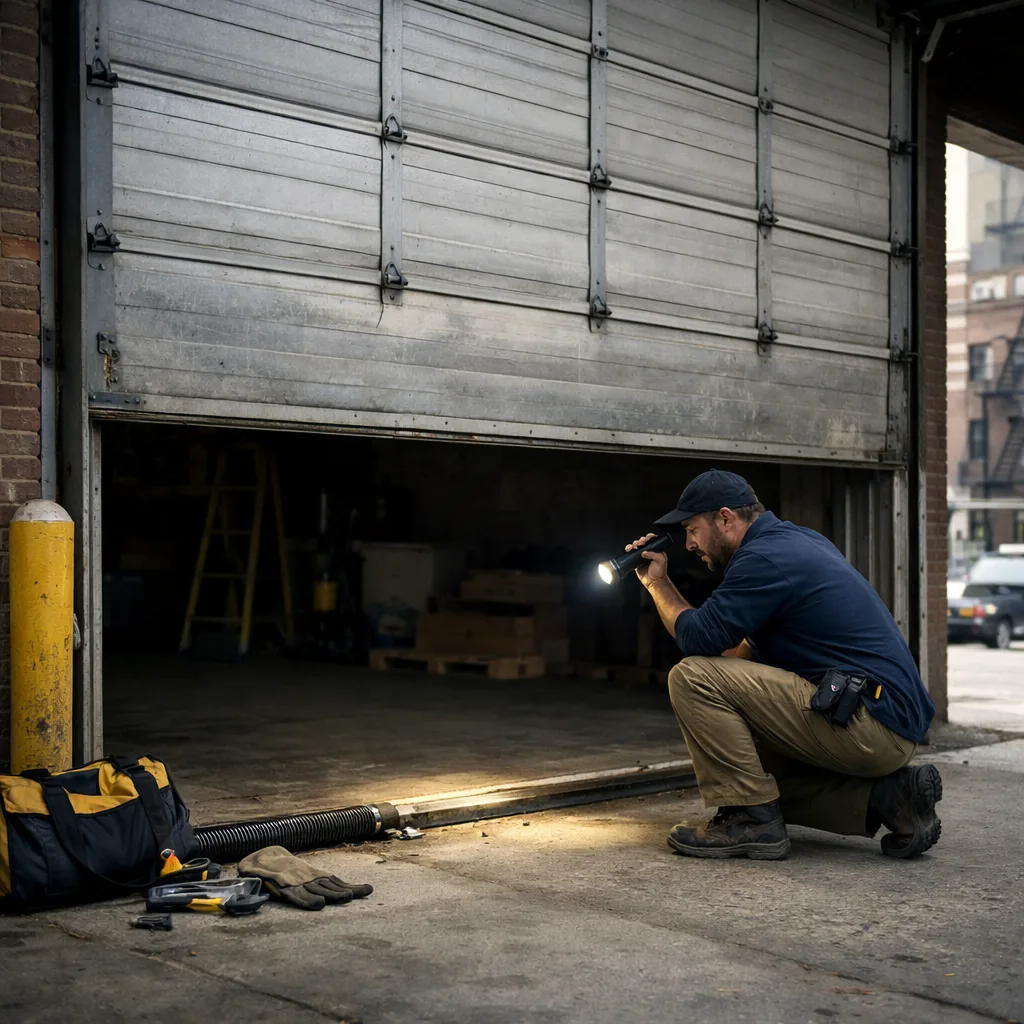
Commercial repair · New York, NY
Commercial Garage Door Repair
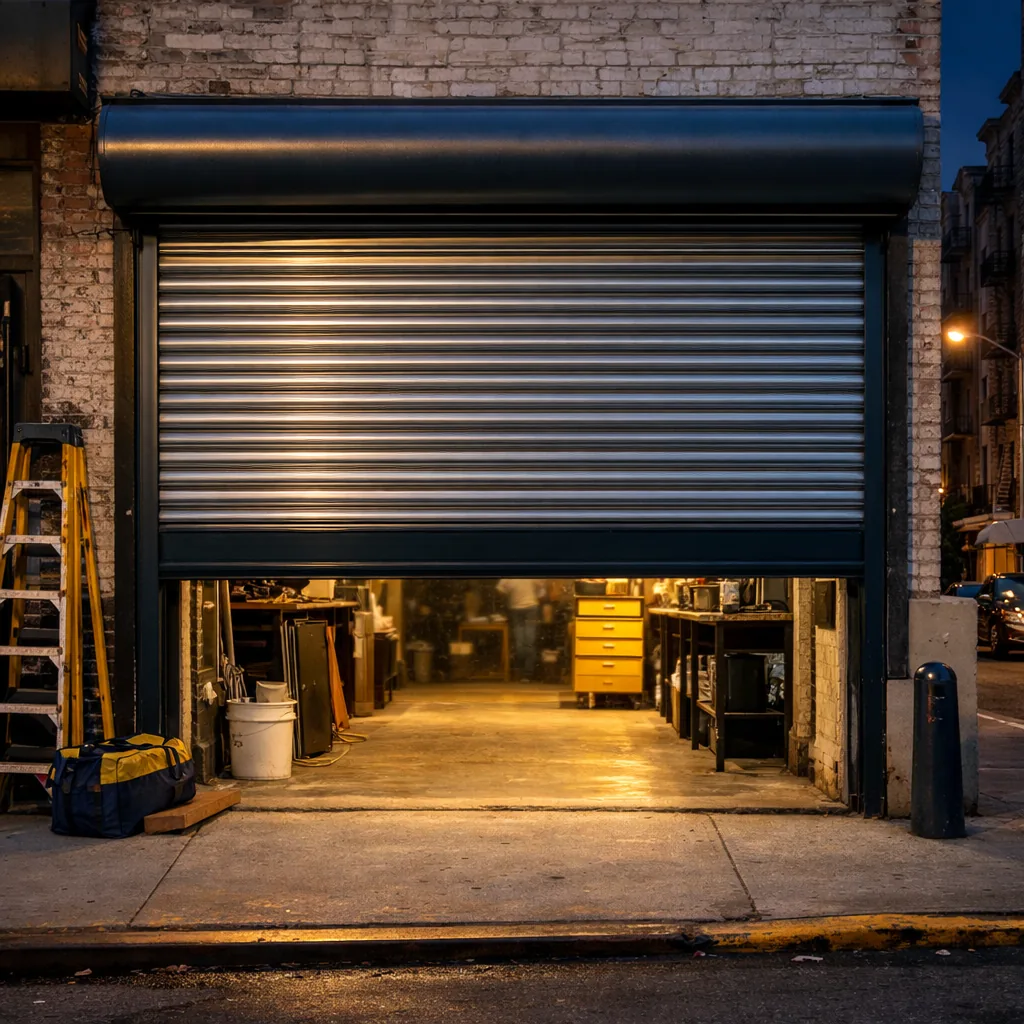
Springs, openers, tracks, panels and rolling steel doors on shops, warehouses and loading bays. We come to your building, look at the door while you tell us what it is doing, and explain the fix and the price before we touch it.
- Licensed and insured
- Upfront quote before work
- Parts and labor warranty
What the job involves
Why a business door fails differently than a home door
Commercial garage door repair is a different job from a house door, even though the parts have the same names. A warehouse or shop door is wider and heavier, it opens and closes many times a day, and it often gets bumped by a pallet jack, a hand truck or a delivery van backing in. Those cycles wear out springs, rollers, cables and hinges far sooner than a family garage would.
The usual causes are worn torsion springs sized for a lighter duty, bent track from an impact, frayed lift cables, cracked or dented panels, and an operator that has been asked to move a door that is out of balance. Across the industrial blocks of Maspeth and Long Island City in Queens, and the food and freight yards at Hunts Point in the Bronx, we see all of these on doors that run from early morning to late evening. Steel doors near the Red Hook waterfront in Brooklyn also take damage from road salt and damp air, which eats hardware and the bottom seal first.
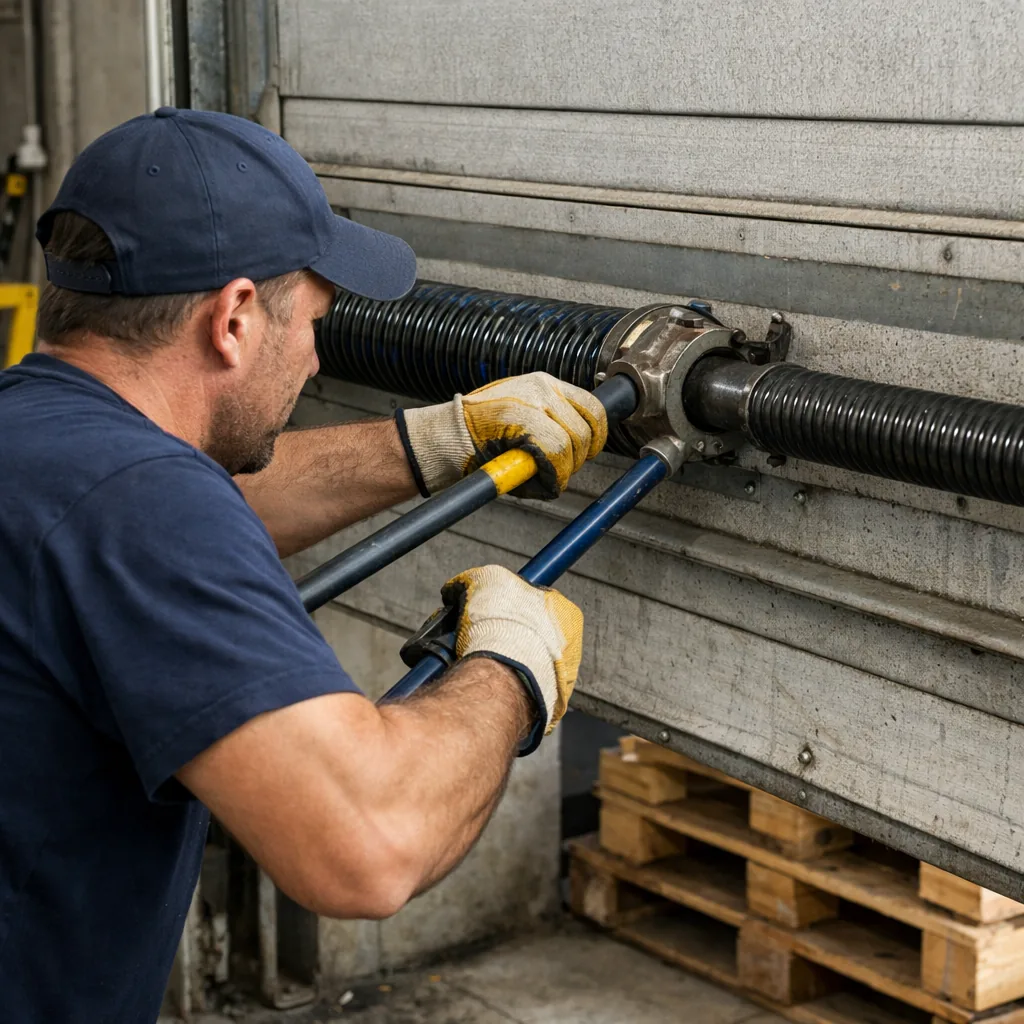
Where we start
What we check first on a shop or warehouse door
Springs and balance
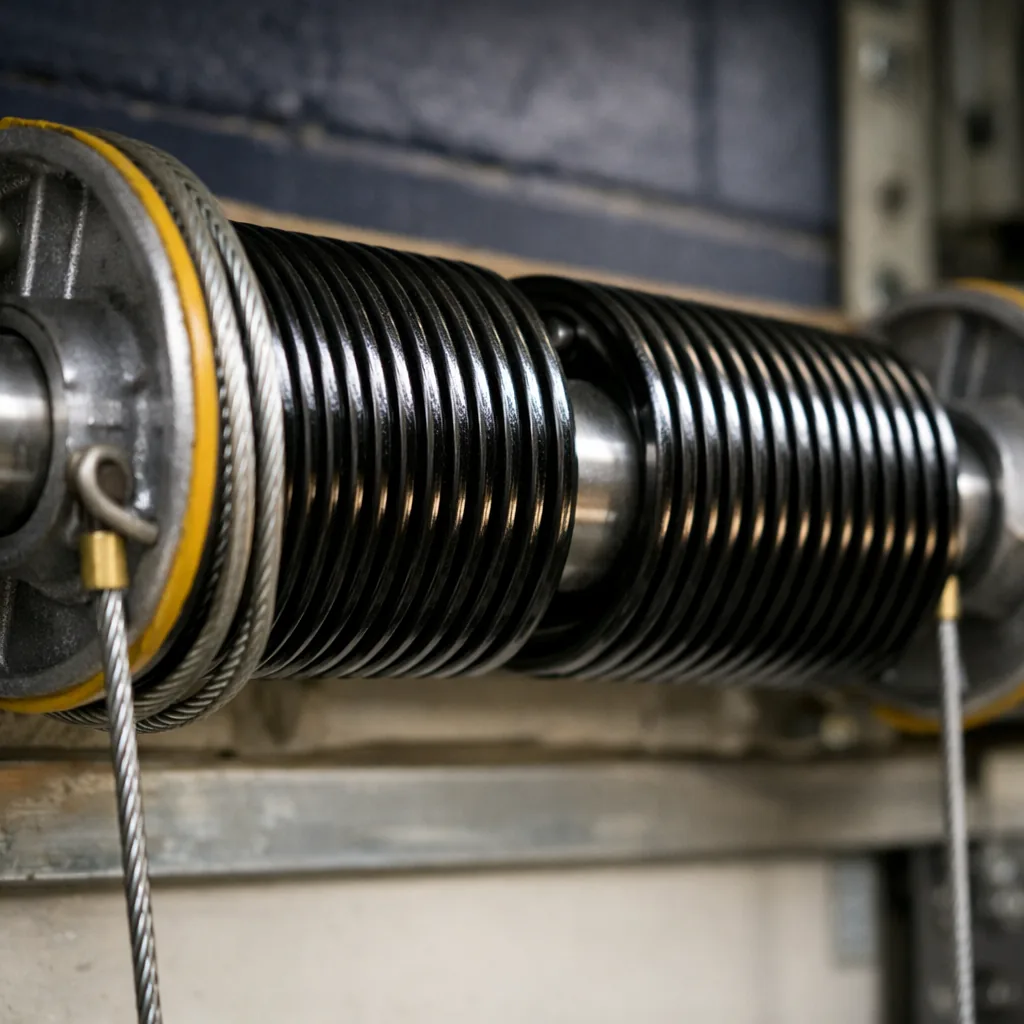
A wide door runs on one or more torsion springs on a shaft above the opening. We check for a gap in the coil, a loose cone, and whether the door holds still when lifted halfway. A door that drifts is out of balance, and balance has to be right before anything else is judged.
Cables, drums and bottom brackets
Lift cables carry the whole weight of the door. We look for frayed strands, a cable that has jumped its drum, and bottom brackets that have been bent by a hit. A worn cable is replaced as a pair so the door lifts level.
Track, rollers and hinges
Dented track or a missing roller makes the door bind and can push it off the rails. We check alignment on both sides, tighten the track brackets, and replace cracked hinges and worn rollers.
Panels and seals
A single crushed panel can often be replaced without a whole new door, if the section is still made. We also look at the bottom seal and the weatherstrip, since gaps let in water, cold and pests.
Operator and safety reversing
Trolley, jackshaft and other commercial operators all depend on a door that moves freely by hand. We check the limits, the force settings and the safety edge or photo eyes, so the door reverses when something is in its path.
The process
How a commercial door repair goes
-
01
You tell us what the door is doing
Describe the noise, the sticking, the way it sits crooked or refuses to move. Tell us the door type if you know it: sectional, rolling steel, or a rolling grille.
-
02
We come out and inspect it
A uniformed technician arrives at your building, finds the actual fault, and keeps the door secured while the work is judged. If it is unsafe to run, we tell you plainly.
-
03
We explain the problem and the quote
Before any work begins you get the explanation and an upfront quote. Parts, door size and weight, and the condition of the opening are what move the price, and you decide with the number in front of you.
-
04
We repair it and test it
We do the work, balance the door, and run it through full cycles with the operator and safety devices. Repairs are backed by a parts-and-labor warranty.
A loading door that will not close leaves your stock and your doorway open all night. Tell us what it is doing and we will tell you what it likely needs.
Our work
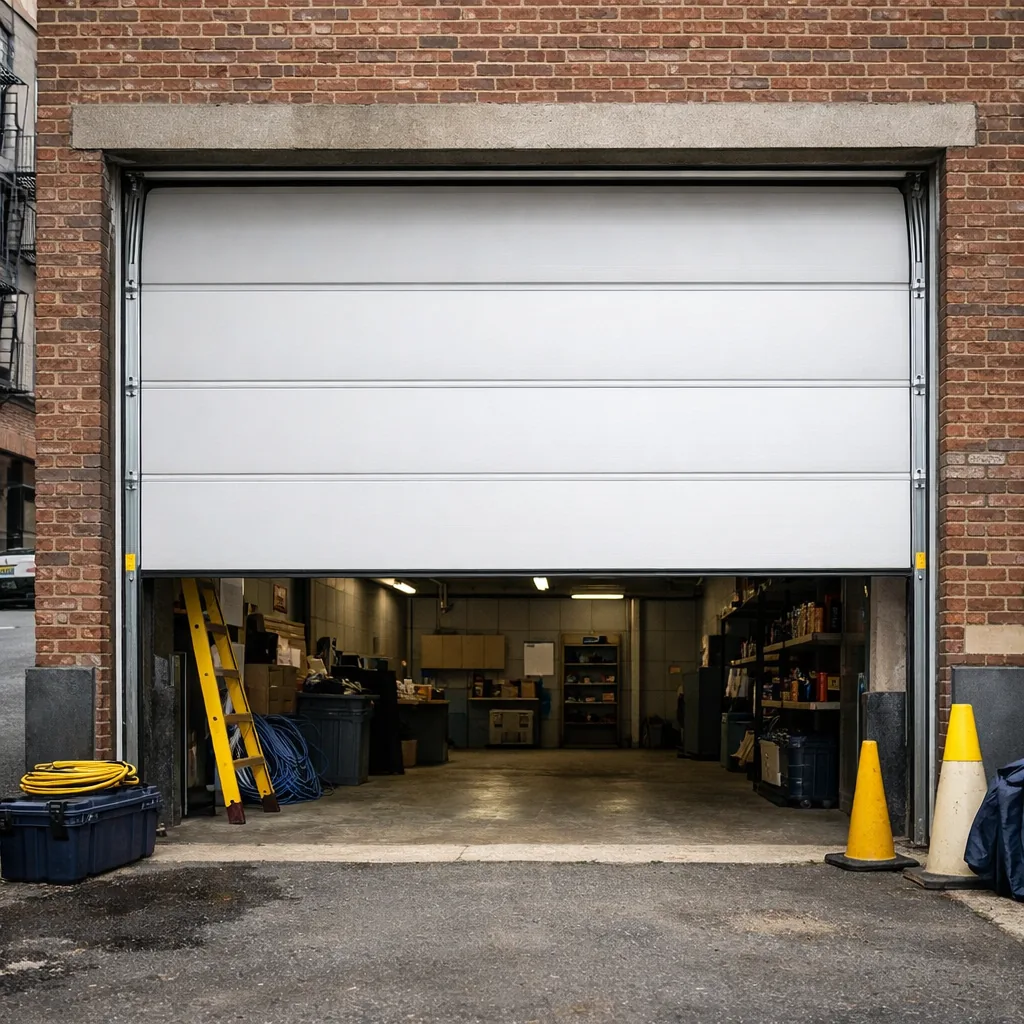
Commercial doors back in working order
Common questions
Questions about repairing a business garage door
Should I repair or replace a commercial garage door?
Is it safe to keep using a commercial door with a broken spring?
What drives the price of a commercial door repair?
How long does a repair usually take?
Can you fix a door that was hit by a truck or forklift?
Will my insurance cover a broken commercial door?
What should I have ready when I call?
Do you do an opener or operator repair too?
Door down, and the business is open?
Tell us what happened and where the door is stuck. We are locally owned and operated, licensed and insured, and we will come out, find the fault and explain the fix and the price before any work starts.
- Licensed and insured
- Upfront quote before work
- Parts and labor warranty